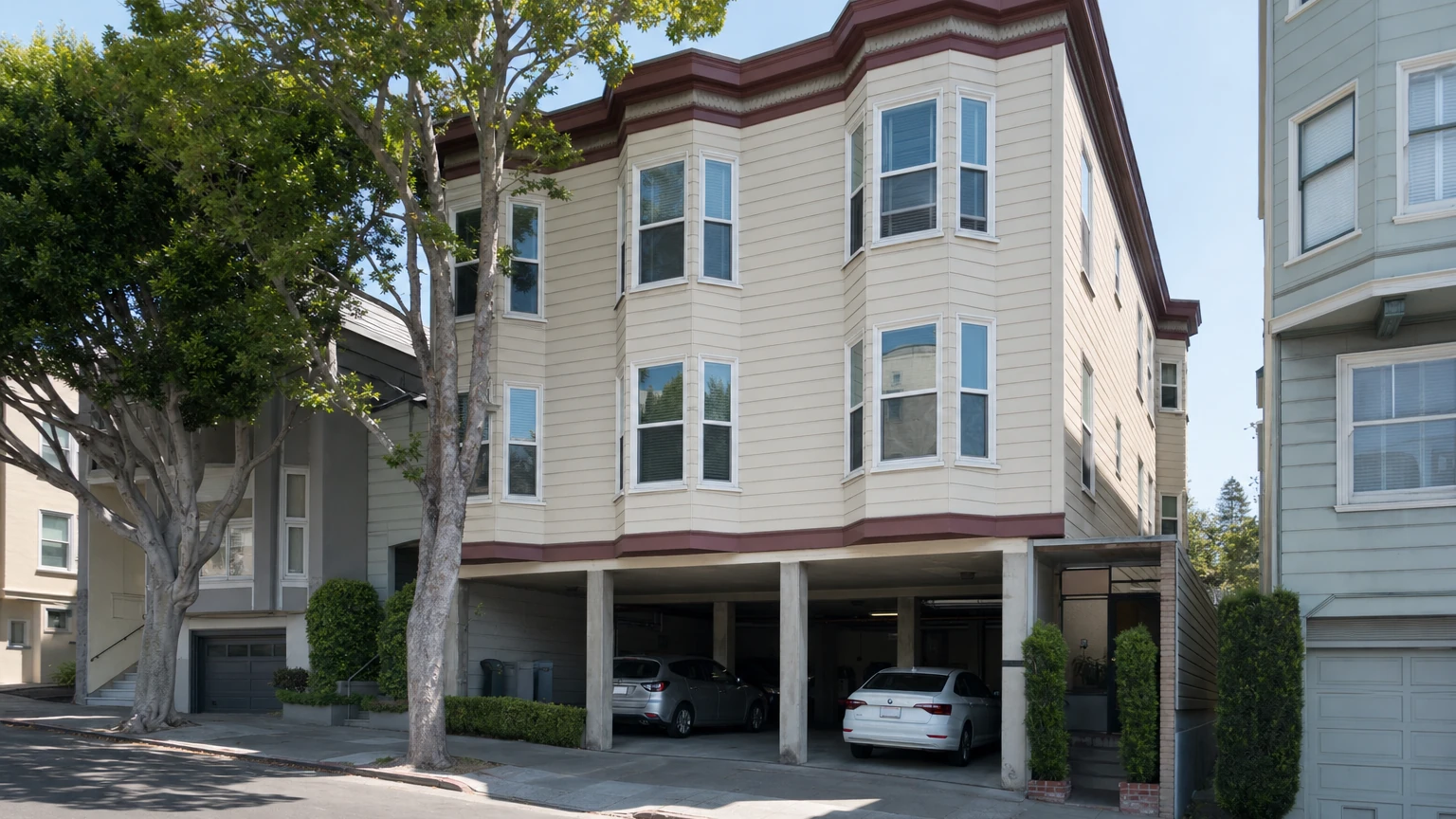
San Francisco's "soft-story" retrofit program is about a specific earthquake vulnerability: a wood-frame building with a ground floor weakened by large openings such as garages or storefronts.
For owners and tenants, the practical questions are simpler than the engineering language. Is my building on the city's list? Is the work already complete? What might I have to pay? Is grant money available in 2026?
This guide collects the official places to check those answers. It also separates San Francisco's mandatory program from California's new Earthquake Multi-Unit Retrofit grant, because being required to retrofit does not automatically make a building eligible for state money.
What is a soft-story building?
A soft story is a level of a building — often the ground floor — that has substantially less lateral strength or stiffness than the floors above. In San Francisco, garages, storefront windows and other large openings can create that vulnerability in older wood-frame multifamily buildings.
The problem matters in an earthquake because upper floors can be comparatively stiff while the open first floor deforms heavily. San Francisco's mandatory program was created to reduce that risk in older multifamily buildings identified by the city.
How do I check whether my San Francisco building is on the soft-story list?
Start with the city's building records rather than a generic web list. San Francisco's Department of Building Inspection publishes soft-story compliance information through DataSF and property records.
For a specific address, the most useful workflow is:
- Look up the address in San Francisco's Property Information Map or DBI records.
- Check the soft-story program/compliance status.
- Review permit history for retrofit permits and completion records.
- If the status is unclear, confirm directly with DBI before making a financial or tenancy decision.
The city's status datasets can change as permits close and buildings complete work, so an old article or cached list should not be treated as a live compliance determination.
How many buildings are still out of compliance?
The latest citywide snapshot SF News Today has relied on is historical, not a live 2026 count. San Francisco's 2025–2029 Consolidated Plan materials listed 4,655 completed and 284 non-compliant buildings in February 2025.
That number may be lower now. The useful point is that the mandatory program has already moved thousands of buildings through compliance while a smaller group remains at different stages.
Our report on the new state retrofit grant explains why some of those remaining buildings are too large to qualify for the current grant round.
How much does a soft-story retrofit cost in San Francisco?
There is no single official citywide price that can responsibly be applied to every building. Cost depends on the number and size of openings, structural configuration, foundation conditions, engineering design, permit work, access, tenant or business impacts and the amount of construction already completed.
That is why an address-specific engineering assessment matters more than a generic internet estimate.
The new state grant does, however, give owners a useful sense of what eligible assistance can cover. The Earthquake Multi-Unit Retrofit program can reimburse 70% of eligible engineering and permit costs up to $7,000, plus 70% of eligible construction costs up to $4,260 per residential unit.
| Eligible component | 2026 EMR limit |
|---|---|
| Engineering and permits | 70% of eligible cost, up to $7,000 |
| Construction | 70% of eligible cost, up to $4,260 per residential unit |
| Maximum advertised grant | Up to $49,600 for a qualifying 10-unit building |
The grant ceiling is not the same thing as the total retrofit price. It is a reimbursement limit for qualifying expenses.
Who can get the 2026 California soft-story grant?
The current EMR round is available in participating cities including San Francisco. According to the California Residential Mitigation Program, a qualifying property must generally be a wood-frame multifamily building with five to 10 residential units, built before Jan. 1, 1991, with a qualifying soft, weak or open-front deficiency and a mandatory retrofit order from the local jurisdiction.
Registration runs from Aug. 19 through September 30, 2026.
The five-to-10-unit rule is important in San Francisco because the city's mandatory program also covers larger buildings. A property can therefore be required to retrofit locally and still be outside the state grant's unit-count limit.
What deadlines apply?
There are two different kinds of deadlines to keep separate.
Grant deadline: the current EMR registration window closes September 30, 2026.
Building compliance deadlines: these depend on the building's existing order, permit and enforcement history. Owners should use the current DBI record for the address rather than assume the statewide grant date replaces a city compliance obligation.
What should renters know?
Tenants do not need to become structural engineers to ask useful questions. If retrofit work is planned at your building, ask the owner or property manager what work is permitted, when construction is expected, whether access to garages or common areas will change and whether temporary relocation is anticipated.
Rent-control, pass-through and relocation questions can depend on the property and the work being performed. Those are separate from the engineering question of whether the building appears on a soft-story list.
What should owners do next?
First confirm the address and current program status. Then confirm whether a permit or completed retrofit already exists. If work remains, speak with a qualified structural professional about the actual building rather than assuming a generic retrofit design or internet cost applies.
If the property has five to 10 units and otherwise appears to meet the 2026 EMR criteria, check the state program before the Sept. 30 registration deadline.
Official resources to keep handy
- California Earthquake Multi-Unit Retrofit program
- 2026 EMR registration announcement and eligibility
- DataSF soft-story information
- San Francisco DBI permit tracking
The most useful answer for any individual building is still address-specific. A citywide guide can tell you where to look; the current permit and compliance record tells you what applies to the property in front of you.