A transportation project that will eventually reshape a low-stress route through the Bayview is getting a small real-world test today.
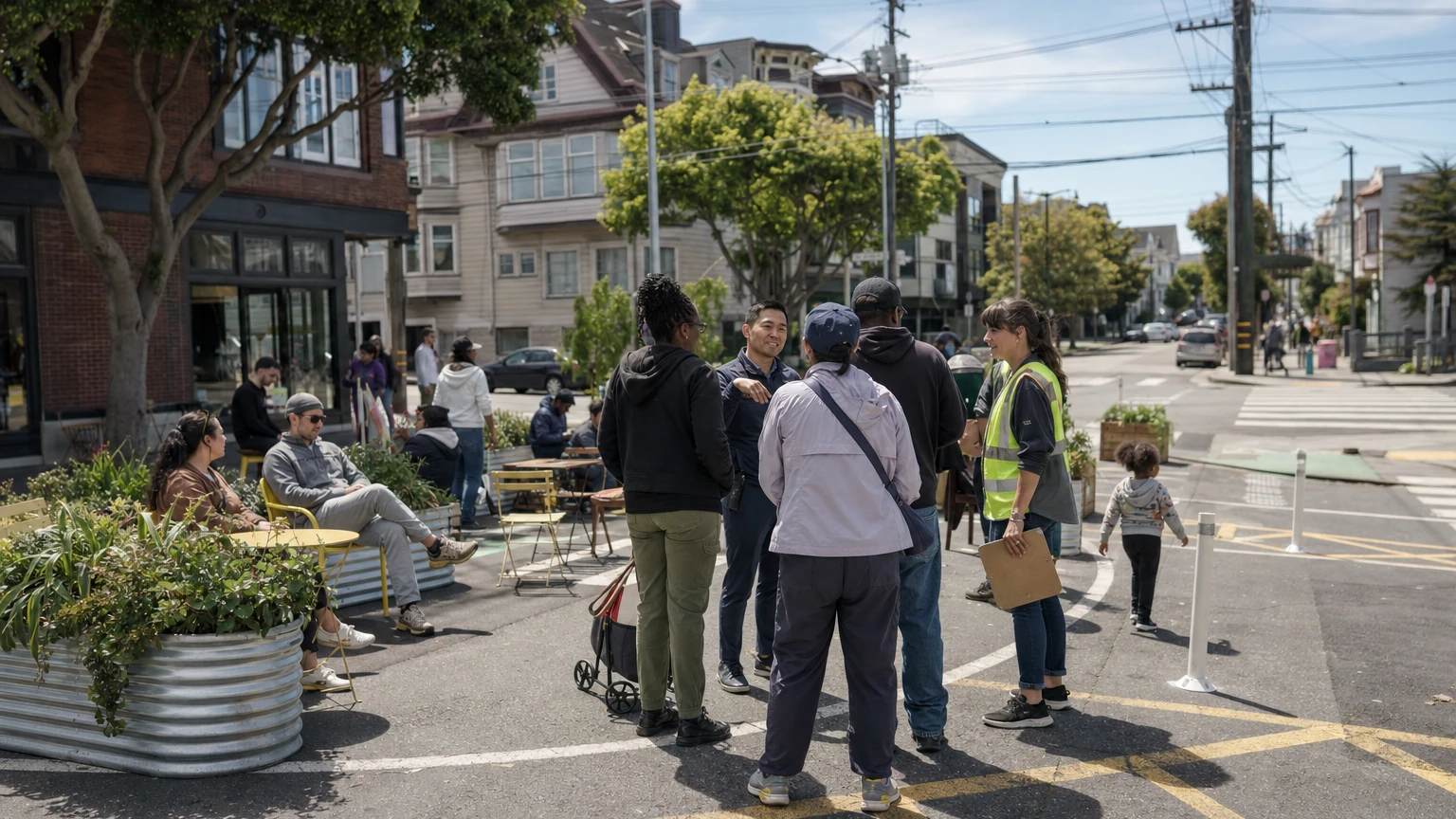
During Sunday Streets Bayview, noon to 5 p.m. on Aug. 23, SFMTA says it will create a temporary demonstration of the proposed pedestrian plaza at Underwood Avenue and Third Street, using furniture, plants and other placemaking elements.
The agency is also using the event to collect feedback on the broader Bayview Community Pathway, a planned north-south route intended to make walking, biking, rolling and transit connections safer east of Third Street.
The project is an alternative to riding directly on Third Street
The Community Pathway is designed around a route parallel to Third Street rather than simply adding one continuous facility to the arterial itself.
SFMTA's planned corridor runs between Cargo Way and Carroll Avenue using Mendell Street, McKinnon Avenue, Lane Street, Underwood Avenue and Keith Street. The goal is to connect homes with destinations including the Southeast Community Center, Bayview YMCA, parks, schools, libraries, grocery stores and transit.
The concept grew out of earlier neighborhood transportation planning in which residents identified a lower-stress parallel route as a priority.
Safety is the reason the project exists
SFMTA says both Third Street and Lane Street are on San Francisco's High Injury Network. The agency describes that network as the 12% of city streets where 68% of transportation-related severe and fatal injuries occur.
That statistic helps explain why today's demonstration is more than a beautification exercise. The project combines pedestrian spaces and distinctive street markings with an effort to create a connected route that feels safer for people who do not want to mix with the fastest traffic on Third Street.
The project also specifically calls out seniors, young people and people with disabilities as priority users.
The pathway includes more than pavement
Current plans include pedestrian-friendly gathering spaces, unique street markings, community walks and rides, group bike classes, speed-safety education and possible green infrastructure such as bioretention planters and additional trees.
SFMTA also says the project is intended to reinforce the African American Arts & Cultural District through public-space design and community-selected visual elements.
That is why the agency is asking residents to weigh in on details such as decorative crosswalk themes and colors rather than treating those choices as an afterthought.
Construction is still a long way off
The Community Pathway was approved by the SFMTA Board in December 2025 and is now in detailed design and continuing engagement. SFMTA's published timeline places construction in 2028.
Between now and then, the agency plans education, encouragement and open-street programming along the corridor. Today's Sunday Streets demonstration is therefore part preview, part design workshop and part test of how residents actually use a space when traffic is temporarily removed.
The useful question after the event is not whether the planters and furniture looked good for one afternoon. It is which elements residents use, which feel awkward, and what changes before the project reaches final design.