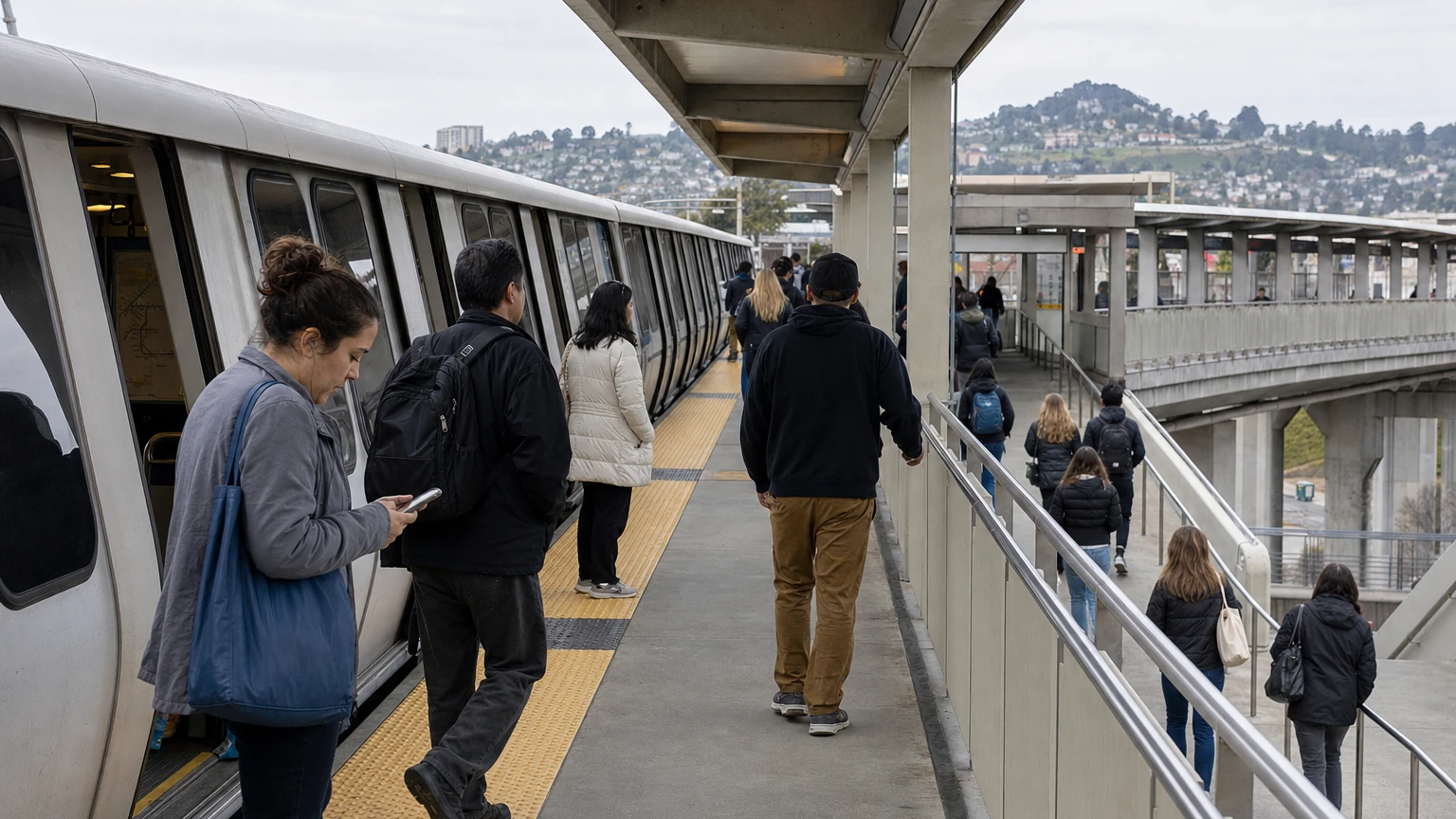
SAN FRANCISCO — BART riders traveling between San Francisco and the East Bay should expect a slower Sunday trip as crews reduce service to one track between San Leandro and Bay Fair.
BART says the work begins before passenger service starts and continues until 6 p.m. Sunday, Oct. 25. The agency expects 25–30 minute delays in the area and will suspend Green Line service for the entire day.
What should San Francisco riders do instead of the Green Line?
San Francisco riders who normally use the Green Line toward Berryessa/North San José should take a Blue Line train and transfer to the Orange Line at Bay Fair.
East Bay riders traveling transbay can do the reverse: use the Orange Line and transfer to a Blue Line train at Bay Fair.
Is BART closing any stations?
No. BART says it will continue serving all 50 stations. The disruption is a service-pattern and delay problem rather than a station closure.
Why is the Green Line canceled?
Crews will work in the trackway between San Leandro and Bay Fair to manage vegetation that BART says could affect safe and reliable service. Trains must share one track through the work zone until 6 p.m.
Will trains be more crowded?
BART says Orange and Blue Line trains will be lengthened from six cars to eight cars throughout the day to provide extra capacity for riders who would normally use the Green Line.
How much extra time should riders allow?
BART’s systemwide guidance is to expect 25–30 additional minutes in the affected area. Trips that require the Bay Fair transfer can also feel longer because riders must change trains rather than stay on a one-seat Green Line trip.
If timing is important, check live departures shortly before leaving and build the extra half-hour into the trip.