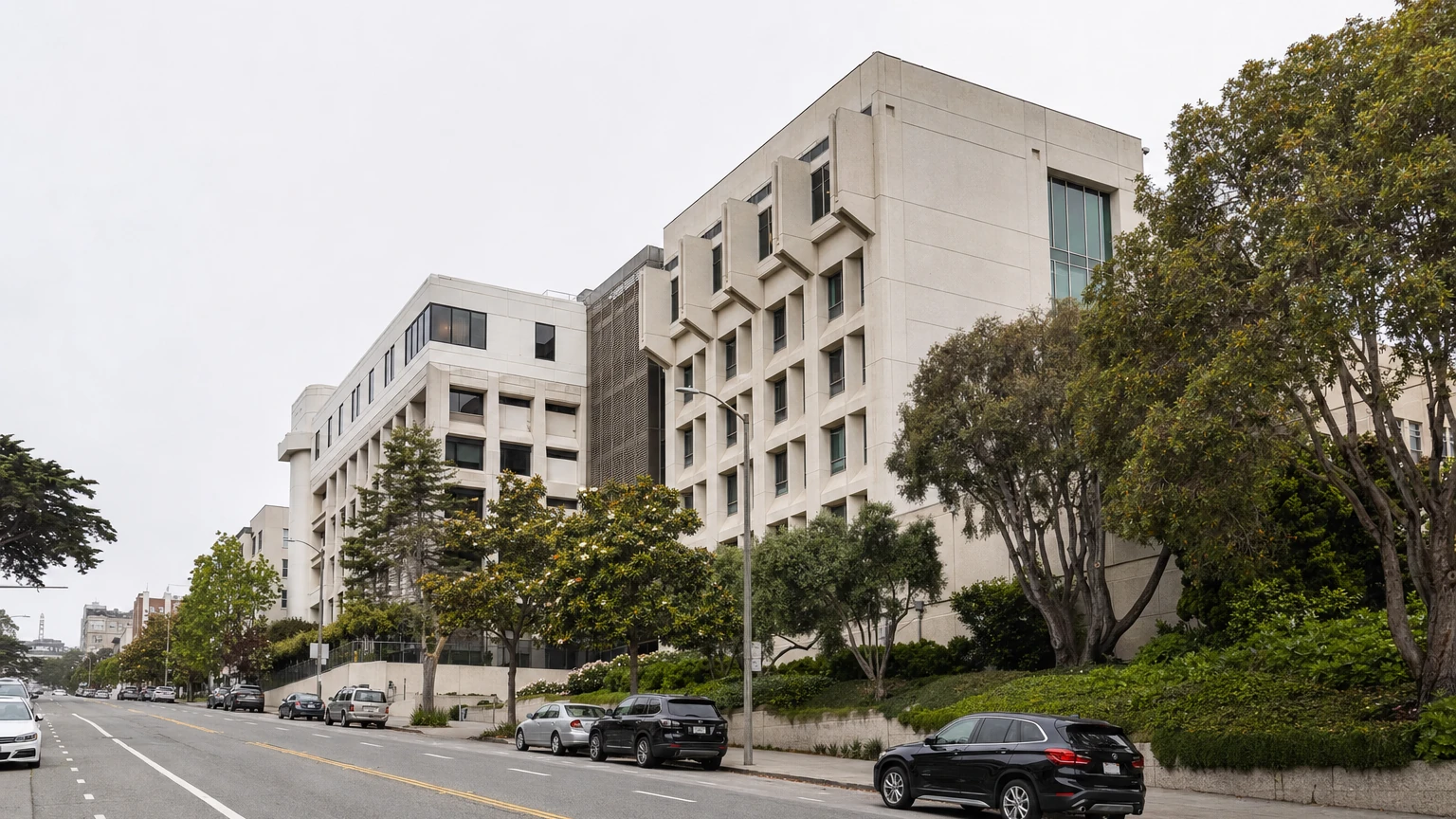
SAN FRANCISCO — A major piece of the former California Pacific Medical Center campus redevelopment has entered San Francisco’s building-permit process.
Two new-construction permit applications filed Sept. 28 cover 250 proposed residential units at the 3700 California Street campus: one application for 214 homes and another for 36.
The filings do not mean construction has been authorized. Current permit data show the applications at early stages of Department of Building Inspection review rather than as issued construction permits.
How many homes are planned at 3700 California Street?
The larger redevelopment totals 530 residential units across the former CPMC California campus.
San Francisco public financing material describes the current program as 298 conventional residential units plus 232 senior-living units. Those 232 senior units include independent living and memory-care housing.
The Sept. 28 applications therefore cover 250 units within the larger 530-unit program. They should not be added on top of the 530-unit total.
What was filed on Sept. 28?
SF News Today’s Crawl 1 monitoring of San Francisco building-permit records identified applications 202609288684 and 202609288686.
The first application lists 214 proposed dwelling units. The second lists 36. The records were associated with the former CPMC campus parcels around California, Sacramento and Cherry streets.
DBI’s permit system distinguishes among an application being filed, later plan-review milestones, approval and final issuance. A filing shows that the project team has moved work into the building-permit process; it does not by itself authorize construction.
What is planned for the former hospital site?
The redevelopment covers roughly 4.9 acres of the former CPMC California campus. Public planning records describe a multi-building residential project combining new construction with preservation and reuse of portions of the historic campus.
The approved program is substantially larger than an earlier version of the redevelopment. City material for the current plan describes up to 530 homes on the campus.
For context, SF News Today has been tracking how major projects move from entitlement into permits and actual construction. Our housing-pipeline analysis explains why units at different approval and construction stages should not be treated as interchangeable.
Does this mean construction is starting?
Not yet.
The important milestone is permit issuance, not permit filing. Building-permit applications can move through several departments and may be revised before DBI approves and issues them.
That is also why SF News Today is not describing the 250 homes as “under construction,” “approved for construction” or “breaking ground” based solely on the Sept. 28 records.
Why the permit numbers matter
The two filings provide concrete records that can now be tracked through DBI’s review process. Changes in status, approved plans, permit issuance and later construction records will show whether and when this portion of the former hospital campus actually moves into work on the ground.
The distinction is similar to another large housing project SF News Today has followed at 960 Howard Street: a fresh application can be meaningful evidence of project activity without proving that full construction has restarted or begun.
What comes next?
For nearby residents and people tracking San Francisco’s housing pipeline, the next meaningful public-record milestone will be movement through plan review and eventual permit issuance.
SF News Today will continue monitoring permits 202609288684 and 202609288686 for status changes, revisions and issuance.