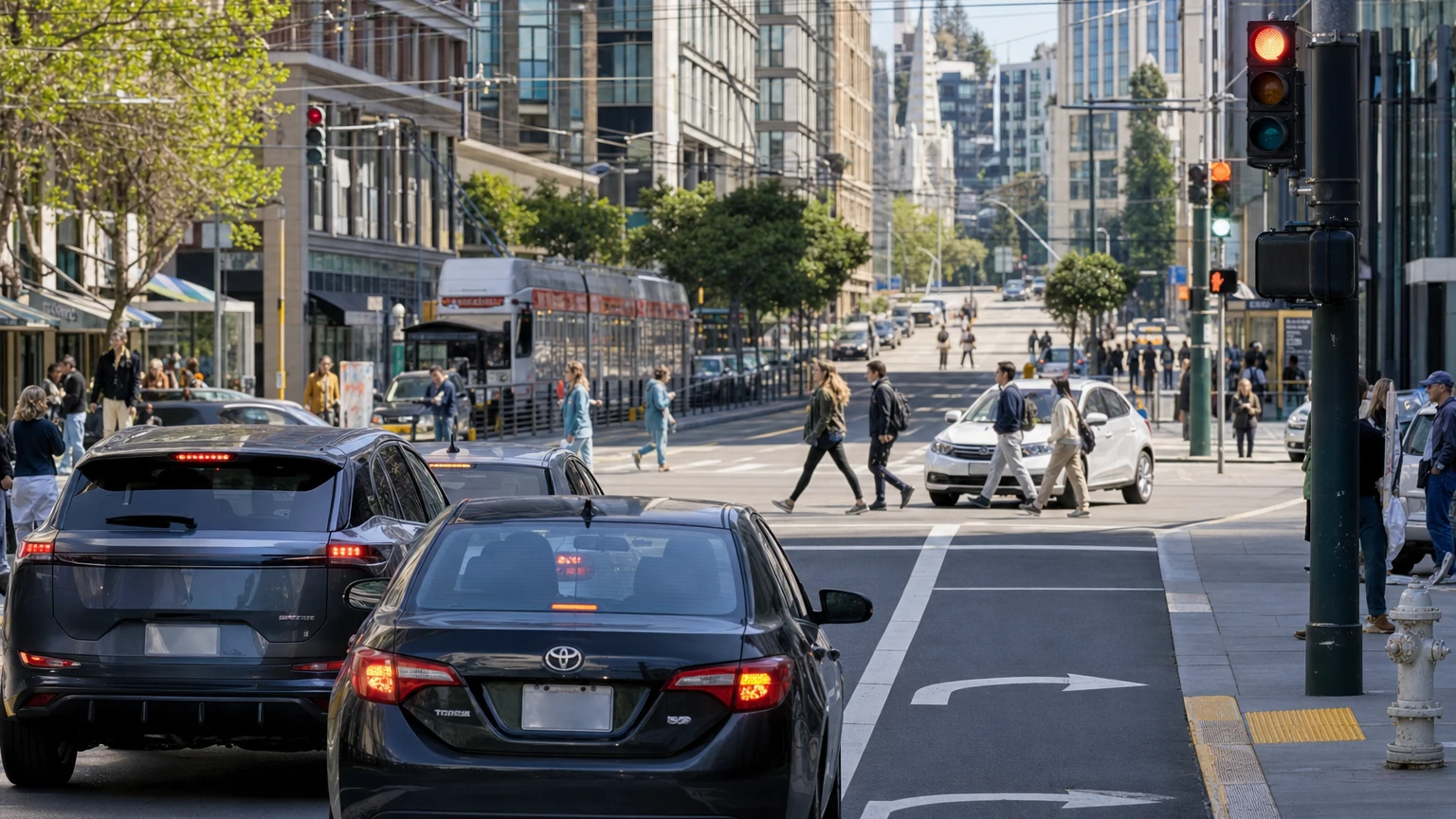
San Francisco is considering another substantial expansion of intersections where drivers cannot turn during a red traffic signal. The San Francisco Municipal Transportation Agency says its No Turn on Red Expansion Project — Phase 3 proposes restrictions at approximately 200 signalized intersections beyond the Downtown core and Tenderloin areas covered by earlier projects.
The key qualification for drivers is that this is a proposal, not a notice that every listed intersection is restricted today. The agency's latest retrieved notice describes legislation and a possible future installation schedule, conditional on project approval.
Which San Francisco neighborhoods are included?
According to the SFMTA notice dated November 13, 2026, the proposed expansion would extend the existing program:
- North: toward Fisherman's Wharf;
- West: toward Gough Street;
- South: toward the Mission District.
The approximate number and area boundaries are not a substitute for a street-by-street list. Drivers seeking an answer for a particular junction should use the official Phase 3 map and notice, which identifies affected intersections, rather than assume every traffic signal in these broad neighborhoods is covered.
The city previously implemented No Turn on Red restrictions in the Tenderloin and Downtown as earlier phases. Phase 3 would enlarge that network if approved.
When would the new signs be installed?
The proposal appeared on the agenda for an Engineering Public Hearing on Friday, November 13, at 10 a.m. SFMTA's written notice says that, if approved after the hearing, installation of the new No Turn on Red signs would begin in spring 2027 and run until winter 2028.
SFMTA explains that no decisions are made at Engineering Public Hearings themselves: they gather public comments. The agency normally posts hearing results the following week, and some proposals require subsequent approval by the City Traffic Engineer or SFMTA Board. The meeting page lists the Phase 3 item, but the SFMTA notice and hearing materials available as of November 16 do not establish final approval. Therefore there is no basis to state that the approximately 200 restrictions were approved or already signed.
What does this mean for a turn at a red light today?
A driver should obey the signage and signals actually present at the intersection. Where a valid No Turn on Red sign is posted, turning on a red signal is prohibited even after stopping. Where there is no such sign, turning rules depend on the governing traffic signal, signs and applicable California law; this proposal does not by itself change today's intersection controls.
The principal questions for drivers, delivery services and taxi operators are which exact junctions will be signed, when installation reaches a particular corridor, and whether the Phase 3 plan receives final approval. Those answers should be checked against SFMTA's published map and any subsequent orders.
Why is the city proposing the expansion?
No Turn on Red restrictions can reduce turning conflicts between drivers and people crossing streets. The SFMTA proposal places this expansion in the context of its earlier downtown and Tenderloin installations. The policy trade-off is that drivers may need to wait for a green signal at more junctions, while pedestrians and cyclists gain a clearer separation from turning movements.
The agency's material establishes the proposed scope and timetable; it does not establish a site-specific quantified crash reduction or exact delay increase. Those claims would require separate evidence before inclusion.
Where to find the official map and approval update
See SFMTA's Phase 3 notice and attached map and the November 13 Engineering Public Hearing page. For a subsequent decision, consult the hearing record and any published SFMTA results. The spring 2027–winter 2028 installation window is conditional on approval, not a guaranteed construction schedule.