SAN FRANCISCO — San Francisco is heading into an unusually hot October weekend with two overlapping warnings: a National Weather Service Heat Advisory and a Bay Area Spare the Air Alert for ozone.
The Heat Advisory begins at 11 a.m. Saturday and runs through 10 p.m. Sunday for San Francisco. At the same time, the Bay Area Air District has declared Saturday and Sunday Spare the Air days because hot temperatures, light winds and a delayed afternoon sea breeze are expected to allow ozone concentrations to build.
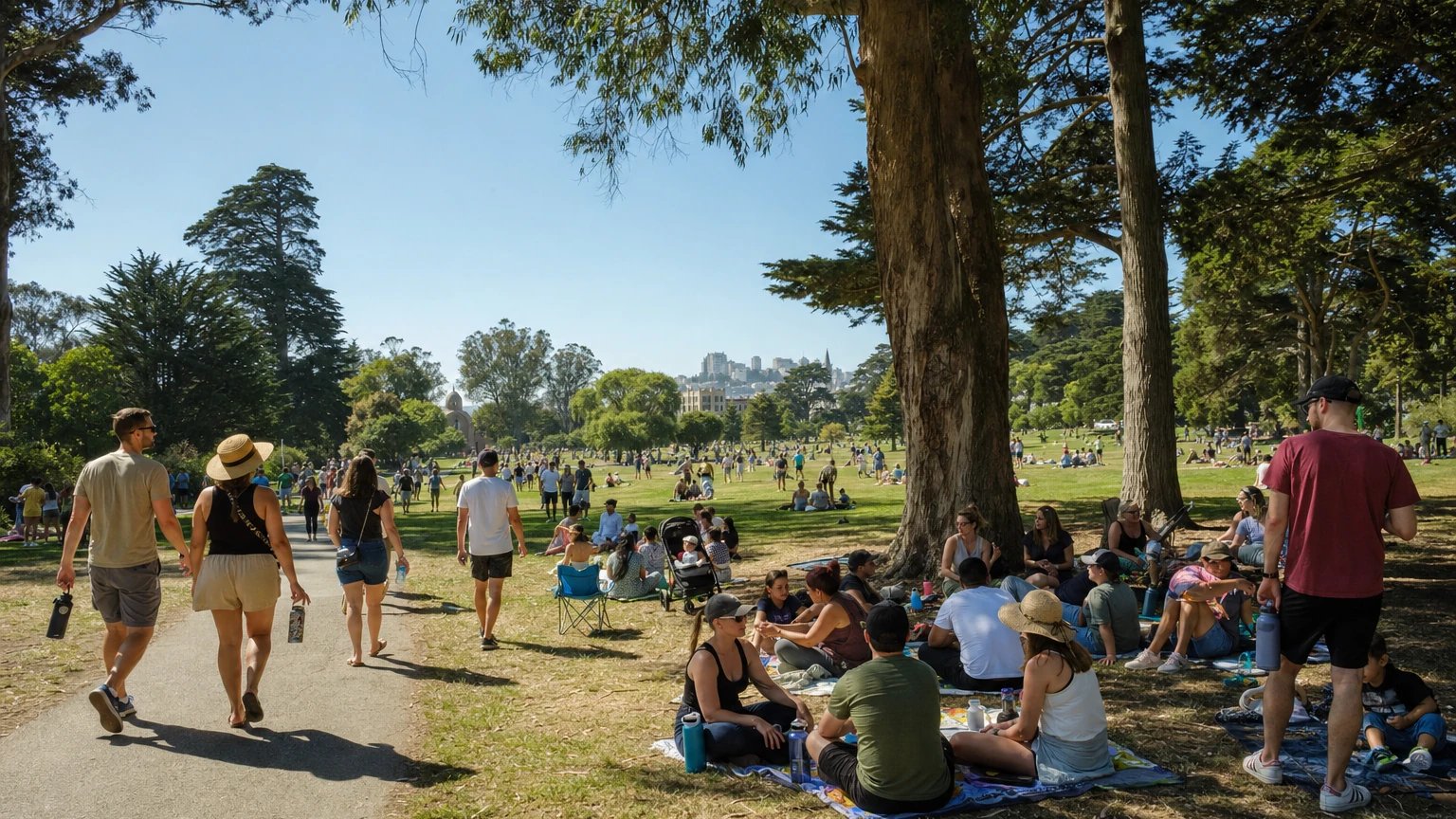
The combination arrives during a busy outdoor weekend that includes Hardly Strictly Bluegrass in Golden Gate Park and the Castro Street Fair on Sunday.
How hot will San Francisco get?
The answer depends heavily on where you are. Current National Weather Service point forecasts show cooler conditions toward the west side and warmer readings farther east and southeast.
Representative forecasts early Saturday put parts of western San Francisco around the upper 70s, while some eastern and southeastern points reach into the mid-to-upper 80s. Central-city forecasts generally fall between those ranges.
That neighborhood spread is typical of San Francisco’s microclimates, but it also means one citywide temperature can be misleading during a heat event.
What is the Spare the Air Alert for?
This weekend’s alert is for ozone, or smog, not a wildfire-smoke event.
The Bay Area Air District says high temperatures, light surface winds and a delayed sea breeze are expected to produce elevated ozone concentrations. The agency says conditions could affect the Coast and Central Bay as well as hotter inland areas.
Ozone forms when pollutants react in sunlight, which is why concentrations can increase during warm, stagnant afternoons even when the sky does not look smoky.
The Air District says children, older adults and people with respiratory or heart conditions are particularly vulnerable. It recommends outdoor exercise during the early morning, when ozone concentrations are generally lower.
What does the heat mean for Hardly Strictly Bluegrass?
Hardly Strictly Bluegrass continues in Golden Gate Park through Sunday, putting large crowds outdoors during the warmest portion of the weekend.
San Francisco Recreation and Parks lists extensive event-related road closures around the western portion of Golden Gate Park through Sunday, with some closures continuing beyond the public festival hours.
People attending should plan for both conditions rather than treating this as an ordinary cool Golden Gate Park weekend: bring water, use shade, consider an earlier arrival and take breaks if the heat becomes uncomfortable.
Can you have a bonfire at Ocean Beach this weekend?
No — not while the Spare the Air designation is in effect.
October is normally still within Ocean Beach’s recreational-fire season. But National Park Service rules separately prohibit recreational fires on designated Spare the Air days, even during the normal seasonal window.
That means anyone planning an Ocean Beach fire Saturday or Sunday should not rely simply on the calendar saying October is usually a permitted month. SF News Today’s Ocean Beach bonfire guide explains the other seasonal and site rules.
Why can low-80s heat still matter in San Francisco?
A temperature that may seem ordinary elsewhere in California can create greater risk in San Francisco because prolonged hot weather is less common and many homes do not have air conditioning.
City heat guidance identifies older adults, young children, people with chronic health conditions, outdoor workers and people without effective indoor cooling among those who may be more vulnerable.
Warm nights also matter because homes and apartments have less opportunity to cool after the afternoon peak.
What should people do?
The Air District recommends shifting strenuous outdoor exercise toward the early morning during the ozone alert. Heat guidance recommends drinking water regularly, reducing prolonged exposure to direct sun and using shade or cooler indoor spaces when needed.
People attending outdoor events should also pay attention to how they feel rather than relying on the thermometer alone. Anyone experiencing a medical emergency should call 911.
When do the alerts end?
The current National Weather Service Heat Advisory for San Francisco is scheduled to expire at 10 p.m. Sunday, Oct. 4.
The current Spare the Air Alert also covers Saturday and Sunday.
Weather and air-quality forecasts can change, so people making outdoor plans should check the latest NWS forecast and Air District status before leaving.