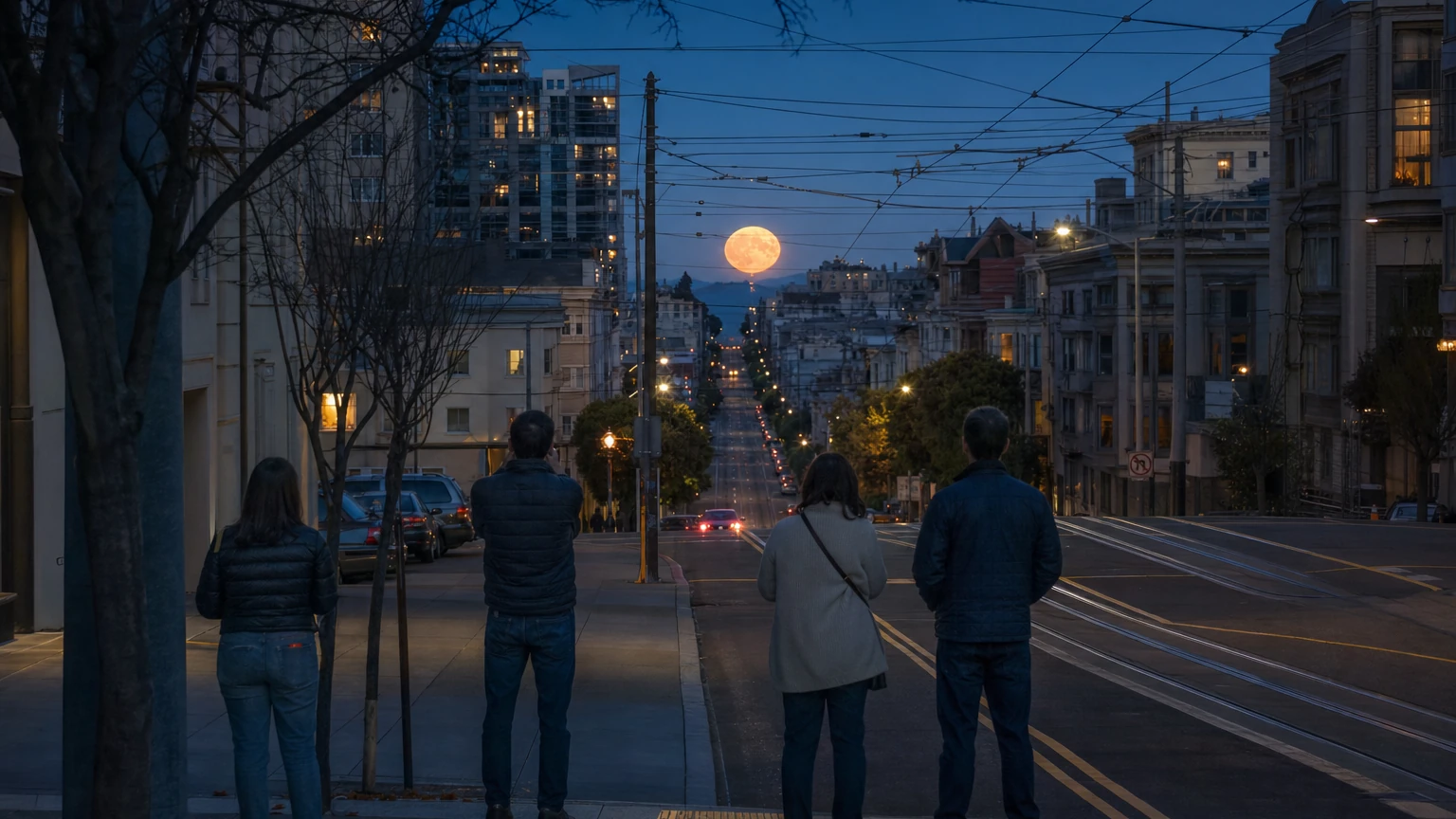
SAN FRANCISCO — The Leonid meteor shower is returning in mid-November, giving Bay Area skywatchers a reason to look up before sunrise on Tuesday, November 17, and Wednesday, November 18. The question for San Francisco residents is less whether the shower will happen than whether skies will be clear enough — and dark enough — to see it.
NASA’s November 2026 skywatching guide identifies the early morning hours of November 17 and 18, after the moon sets, as the best viewing window. Under ideal dark-sky conditions, NASA says rates could approach 15 meteors an hour. City observers should expect fewer, sometimes far fewer.
What time is best to see the Leonids in San Francisco?
Plan for the hours before dawn, after moonset, on November 17 or 18. The moon will be less troublesome once it has set, and a higher radiant later in the night generally helps. Exact moonset and cloud conditions depend on the observation site; check a current local forecast before heading out. You do not need a telescope, ticket, or special equipment.
Two reputable calendars describe the same broad period with slightly different peak-night labels: the American Meteor Society lists November 16–17 as the nominal peak night, while NASA’s new monthly viewing guide recommends the pre-dawn mornings of November 17–18. Meteors are not confined to one minute, so treat this as a two-morning opportunity rather than a precise appointment.
How many meteors should SF viewers actually expect?
NASA’s figure of up to around 15 per hour assumes very good darkness and viewing conditions. Streetlights, the city skyline, haze and marine cloud can reduce the visible rate markedly. It would be misleading to promise a meteor every few minutes from the middle of San Francisco.
Leonids come from debris associated with comet 55P/Tempel-Tuttle. The shower is famous for historic meteor storms, but the American Meteor Society does not forecast a comparable storm for 2026.
Where in San Francisco can you try watching?
Twin Peaks: SF Recreation and Parks lists park hours as 5 a.m. to midnight. That means it is not a legal choice for the entire 3–5 a.m. viewing period; the short 5–6 a.m. predawn window may work if skies are clear. The city says vehicle access uses the Portola Drive gate, while the Burnett Avenue gate is closed to vehicles. Wind and city light remain possible drawbacks. Official Twin Peaks access information.
Ocean Beach: Its wide Pacific horizon makes it worth considering only if the coast is clear of marine clouds and you can reach a legally accessible area safely. The National Park Service says Ocean Beach parking lots close at 10 p.m. and beach bonfires are prohibited November through February. Do not assume overnight vehicle parking is available, enter restricted areas, or approach the surf in darkness. Official Ocean Beach guidance.
These are options, not an organized viewing event. SF park access, road gates, beach conditions and weather can change; check official notices near the date. A safely accessible clear inland viewpoint may outperform a cloudy coast.
Where should you look in the sky?
The Leonids appear to radiate from the constellation Leo, but meteor streaks can flash across many parts of the sky. Lie back or stand where you can view a wide area without bright lights in your eyes. Give your night vision about 30 minutes to adjust and put your phone away during the observation period.
Will there be a live skywatching event or tickets?
No ticket is needed to watch a meteor shower. The atmospheric display is a natural event. Any organized telescope night, paid tour or park program would be a separate activity with its own hours and access conditions. A meteor shower is usually better appreciated with the naked eye than through the narrow field of a telescope.
What about the weather?
A reliable local cloud forecast is not yet possible this far in advance. We will assess San Francisco fog, cloud cover and moonset closer to November 17. For now, the useful step is to mark both pre-dawn windows and keep the plan flexible.